

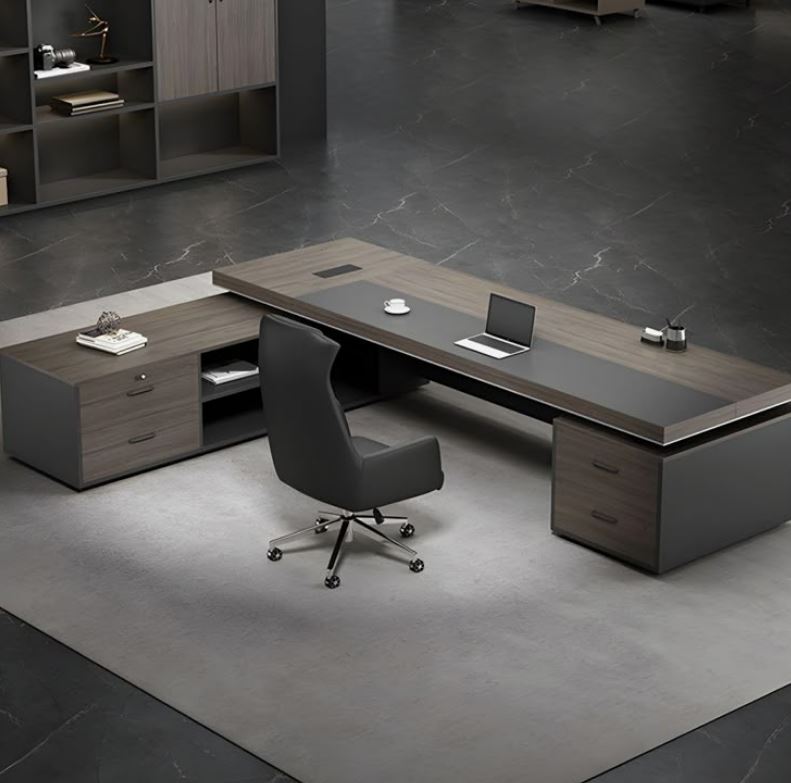
Choosing the right Office Table is more than selecting a surface where employees can place computers, documents, and office supplies. A well-designed table can influence productivity, comfort, organization, collaboration, and the overall appearance of a workplace. For businesses in Manila and Quezon City, the right office furniture should also match the available floor space, work requirements, company culture, and budget.
For organizations planning a new workplace or upgrading an existing one, Manila Office Furniture Den can be considered when comparing office furniture solutions suited to different professional environments. From individual workstations and executive desks to meeting tables and collaborative furniture, selecting the right configuration starts with understanding how each space will be used.
What Is an Office Table?
An Office Table is a functional workplace surface designed for professional tasks such as computer work, writing, meetings, planning, and document management. Depending on its purpose, an office table can include drawers, cable-management features, storage compartments, partitions, or modular components.
The best choice depends on who will use the table and what activities will take place there. An executive office may require a spacious and formal desk, while a startup may benefit from compact modular workstations that make better use of limited floor space.
How to Choose the Right Office Table
The first consideration should be the table’s intended purpose. A workstation used for daily computer tasks has different requirements from a conference table used for meetings.
Measure the available area before purchasing furniture. Consider walking paths, chairs, cabinets, doors, windows, electrical outlets, and other furniture. A table that looks appropriate in a showroom may feel too large once installed in a busy office.
Work style is another important factor. Employees who spend most of the day working at computers need adequate surface space for monitors, keyboards, documents, and accessories. Teams that frequently collaborate may benefit from larger shared tables or modular configurations.
Material and construction should also be considered. Office furniture needs to withstand regular use, so durability, stability, surface finish, edge quality, and hardware can affect long-term value.
Popular Types of Office Tables
Different workplaces require different table configurations. Understanding the available options makes it easier to match furniture with specific departments and functions.
Executive Office Tables
Executive tables are generally larger and designed to create a professional appearance. They can provide generous workspace for computers, paperwork, meetings, and personal storage.
These tables are often suitable for managers, directors, business owners, and other senior professionals who require additional workspace.
Staff Office Tables
Staff tables are designed for everyday employee use. Practical dimensions, comfortable working space, durability, and efficient cable management are usually more important than an elaborate appearance.
For larger offices, standardized staff tables can also create a consistent visual layout while making future expansion easier.
Computer Tables
Computer tables are designed around technology-based work. They may provide dedicated areas for monitors, keyboards, CPUs, printers, or other equipment.
Good cable management can help prevent tangled wires and keep workstations more organized.
Meeting Tables
Meeting tables provide a shared surface for discussions, presentations, planning sessions, and team collaboration. The appropriate size depends on the number of participants and the dimensions of the meeting room.
A meeting table should leave sufficient space around chairs so people can move comfortably without obstructing entrances or walkways.
Modular Office Tables
Modular tables are useful for businesses that expect their workspace requirements to change. They can be arranged into different configurations and may support team-based layouts.
This flexibility can be especially valuable for growing companies, startups, and offices that frequently reorganize departments.
Office Table Design and Workplace Productivity
Furniture design can affect how efficiently employees use their workspace. A cluttered or poorly planned workstation can make routine activities less convenient, while an organized setup can provide easier access to essential equipment and documents.
An effective office layout should balance individual concentration with collaboration. Tables should provide enough personal workspace without consuming unnecessary floor area.
Cable management is another practical consideration. Computers, monitors, chargers, phones, and other devices can create significant cable clutter. Tables with suitable cable-management solutions can contribute to a cleaner workspace.
Storage should also be planned carefully. Employees need convenient places for documents, stationery, and frequently used items. However, excessive storage attached to every table can reduce flexibility and consume valuable floor space.
Choosing an Office Table for Small Offices
Small offices require careful space planning. Instead of selecting oversized furniture, businesses can consider compact tables, streamlined workstations, or modular configurations.
The goal is not simply to fit as many desks as possible. Employees still need sufficient space to work comfortably and move around safely.
For small offices in Manila and Quezon City, measuring the room before purchasing furniture is particularly important. Businesses should consider the complete layout rather than evaluating a table as an isolated product.
Office Tables for Corporate Workspaces
Corporate offices often require furniture that supports multiple departments and different work styles. A combination of individual workstations, collaborative areas, meeting tables, and executive furniture can create a more functional environment.
Consistency can also matter for corporate branding. Similar finishes, colors, shapes, and materials can create a unified appearance throughout different departments.
Procurement teams should consider durability, maintenance requirements, scalability, delivery, installation, and after-sales support when evaluating office furniture suppliers.
Office Tables for Startups
Startups often operate with changing team sizes and evolving workspace requirements. Modular office furniture can provide greater flexibility than highly fixed layouts.
A startup may begin with individual workstations and later need larger collaborative areas as the team grows. Choosing adaptable furniture can make future changes easier without requiring a complete office redesign.
Budget is naturally important, but businesses should avoid selecting furniture based solely on the lowest purchase price. Durability, usability, maintenance, and expected service life can influence the total cost of ownership.
Office Tables for Schools, Hospitals, and Government Offices
Office furniture requirements vary significantly between industries. Schools may need administrative workstations and staff tables that can withstand frequent use. Hospitals may require practical furniture for administrative departments, reception areas, and consultation-related office spaces.
Government offices often need standardized workstations that support efficient administration and organized document handling.
In each environment, furniture should be selected according to the actual workflow, available space, expected usage, and organizational requirements.
What Materials Are Best for Office Tables?
There is no single material that is best for every office. The right choice depends on budget, design requirements, expected usage, maintenance needs, and durability expectations.
Engineered wood and laminate surfaces are commonly considered for practical office environments because they can provide a balance between appearance and functionality. Metal components can add structural strength, while combinations of different materials can create contemporary office designs.
Before purchasing, inspect the construction quality rather than judging the furniture only by its surface appearance.
Office Table Size and Space Planning
Correct dimensions are essential for a functional workplace. A table should provide adequate working space while allowing employees to sit comfortably and move around the office.
Consider the complete workstation footprint, including the chair. The space behind an occupied chair should not interfere with walkways or nearby workstations.
Businesses should also consider monitor placement, keyboard position, storage requirements, and the number of devices employees regularly use.
For larger projects, creating a floor plan before ordering furniture can reduce the risk of purchasing unsuitable sizes.
Common Office Table Buying Mistakes
One common mistake is purchasing furniture before measuring the workspace. Another is focusing entirely on appearance while overlooking durability and functionality.
Businesses can also make the mistake of choosing identical tables for every department even when employees have different work requirements.
Ignoring cable management, storage, chair compatibility, electrical access, and future expansion can create problems after installation.
A better approach is to evaluate furniture as part of the complete office system.
Office Table Buying Checklist
Before making a purchase, consider the intended users, available floor area, table dimensions, material quality, storage requirements, cable management, workstation layout, chair compatibility, maintenance needs, delivery requirements, installation, and future expansion.
For larger projects, it can also be useful to prepare a furniture schedule showing quantities, dimensions, locations, and intended users. This can help procurement teams compare quotations more accurately.
How to Get the Best Office Furniture for Your Business
Start by identifying your workplace requirements rather than choosing furniture based only on appearance. Determine how many employees need workstations, which departments require specialized furniture, how much storage is needed, and whether the office may expand.
Next, measure the available space and create a basic layout. This allows you to compare furniture dimensions against the actual workplace.
Finally, discuss your requirements with an experienced office furniture supplier. A professional consultation can help identify practical configurations and avoid unnecessary purchases.
Businesses in Manila and Quezon City can explore suitable office furniture options with Manila Office Furniture Den and request guidance based on their workspace requirements.
Why Local Office Furniture Planning Matters in Manila
Office environments in Manila can vary considerably, from compact commercial offices to large corporate facilities. Local businesses may therefore require different furniture configurations depending on building layout, workforce size, business activity, and available floor space.
Quezon City businesses also include startups, established companies, schools, healthcare organizations, and professional offices. A furniture solution should therefore be based on the specific requirements of the workplace rather than using a one-size-fits-all approach.
Working with a supplier familiar with local business requirements can make planning, quotation, delivery, and installation easier.
Frequently Asked Questions
What type of Office Table is best for employees?
A practical staff workstation with sufficient surface area, durable construction, and effective cable management is suitable for many everyday office environments.
How do I choose the right Office Table size?
Measure the available room and consider the complete workstation, including the chair, walking space, equipment, and storage requirements.
Are modular Office Tables good for growing businesses?
Yes. Modular configurations can provide flexibility when teams expand or office layouts change.
What should I check before buying an Office Table?
Check dimensions, construction quality, materials, storage, cable management, workspace requirements, maintenance, delivery, and installation.
Can office furniture be customized?
Many office furniture suppliers offer customization options depending on the product, materials, dimensions, and project requirements.
How can I plan an office furniture project in Quezon City?
Start with measurements, employee requirements, floor planning, furniture specifications, quantities, and budget before requesting quotations from suitable suppliers.
How can I request an Office Table quotation?
Prepare your preferred quantities, dimensions, workspace requirements, and delivery location, then contact an office furniture supplier for a project-specific quotation.
Final Thoughts
The right Office Table should support the way people actually work. Size, durability, layout, storage, technology requirements, and future flexibility all matter when selecting workplace furniture.
Whether you are furnishing a small startup, corporate office, school, hospital, government department, or professional workspace, careful planning can help you create a more organized and functional environment. For businesses looking for office furniture solutions in Manila and Quezon City, Manila Office Furniture Den can be part of the research and quotation process.
If you are planning an office renovation or setting up a new workplace, request a furniture consultation or quotation based on your available space, number of employees, preferred layout, and specific business requirements.

